
CASE STUDY: Marza Animation Planet
Designing a Creative Production Studio for Sega’s CGI Powerhouse in Burbank, CA

When Marza Animation Planet (Sega's acclaimed CGI and animation division) set out to establish their Burbank studio, they faced a common creative industry dilemma: how do you design a workspace that fuels creativity and supports the technical demands of high-performance production?
The space needed to accommodate both collaborative brainstorming zones and focused individual workstations. It had to feel open and energizing, yet provide acoustic control for concentration. And critically, it needed to embody the innovative spirit of a company known for pushing boundaries in digital animation.
The goal: Create a workspace as dynamic and inspiring as the content produced within it.
The Existing Space: A Blank Canvas (In the Worst Way)
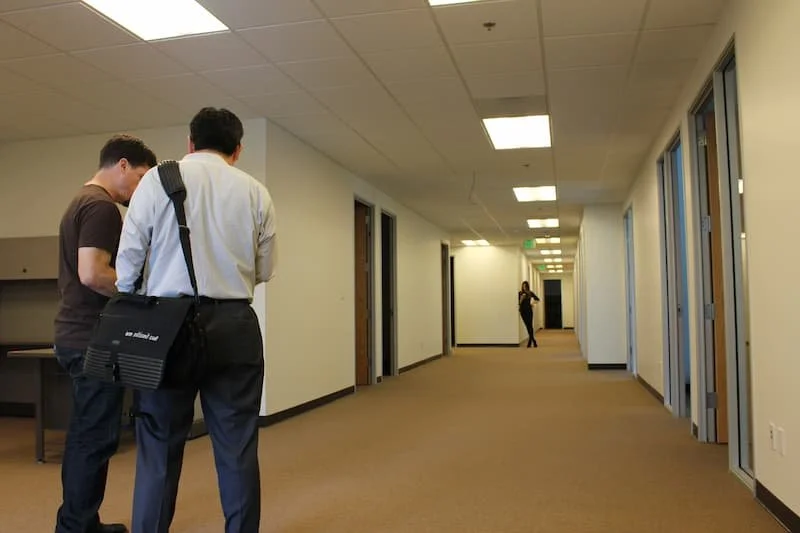
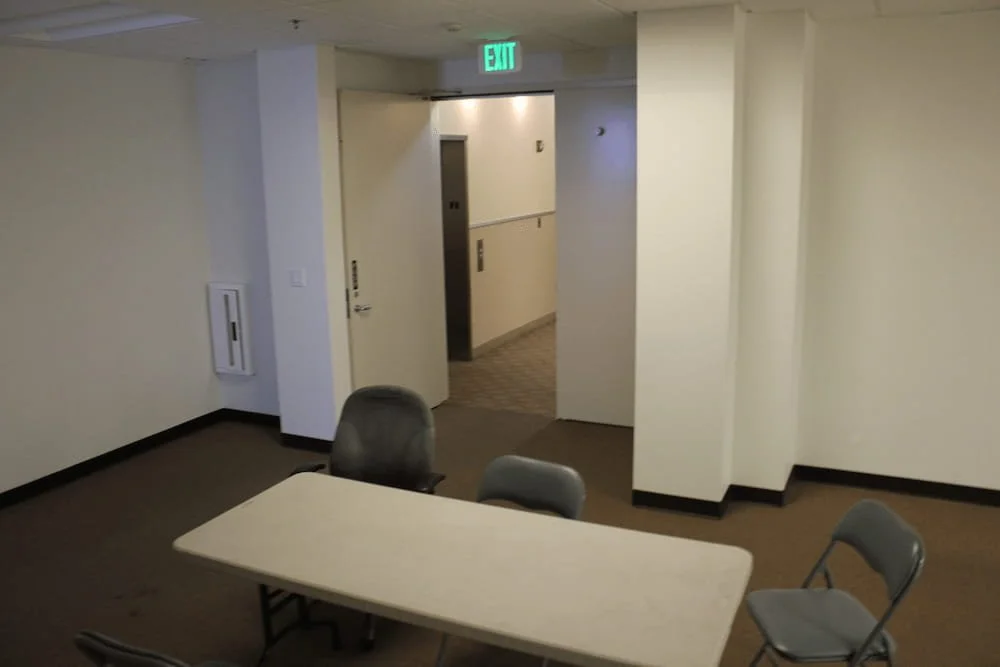
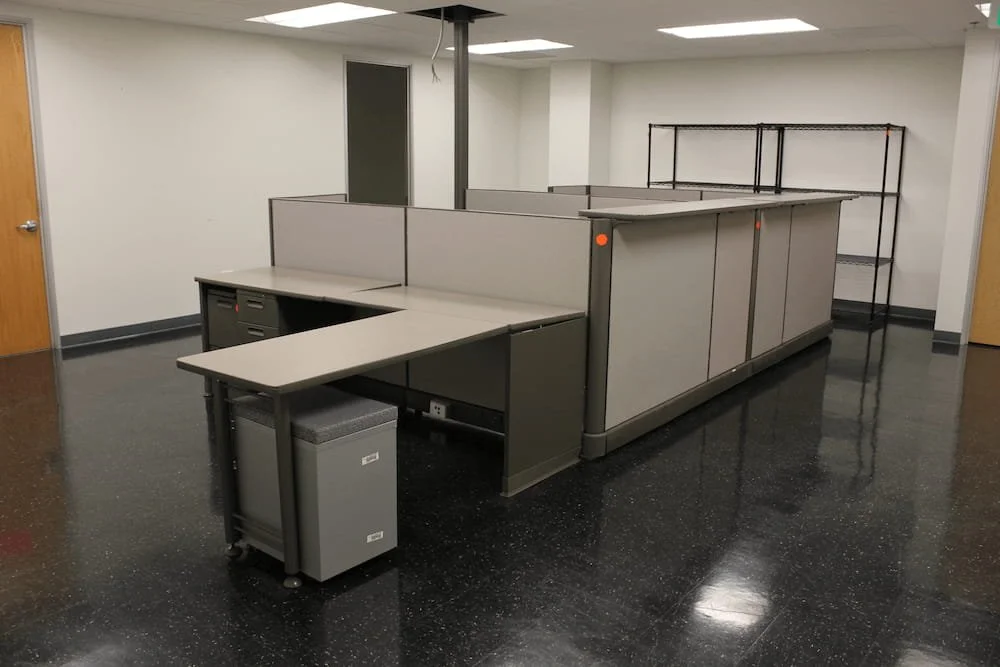
When we first walked through the Burbank location, the space was everything a creative studio shouldn't be.
Standard drop ceiling tiles compressed the ceiling height, making the 6,700 sq ft feel confined and claustrophobic. Very little natural light penetrated the interior, leaving most of the workspace feeling dark and closed off. The finishes were generic office buildout: stark, boring, completely anonymous.
Nothing about the space reflected Marza's identity as Sega's innovative CGI and animation division. There was no energy, no personality, no sense that creative work happened there. It was the kind of forgettable office that drains inspiration rather than fuels it.
The disconnect was obvious. This is a company pushing boundaries in digital animation and visual storytelling. Their workspace looked like it could belong to an insurance agency.
The challenge wasn't just about designing a functional workspace. It was about completely re-energizing the space and transforming it into something that actually felt like a modern creative studio, something that reflected who Marza is and the caliber of work they produce.
Design Decisions
Step 1: Reclaim the Volume
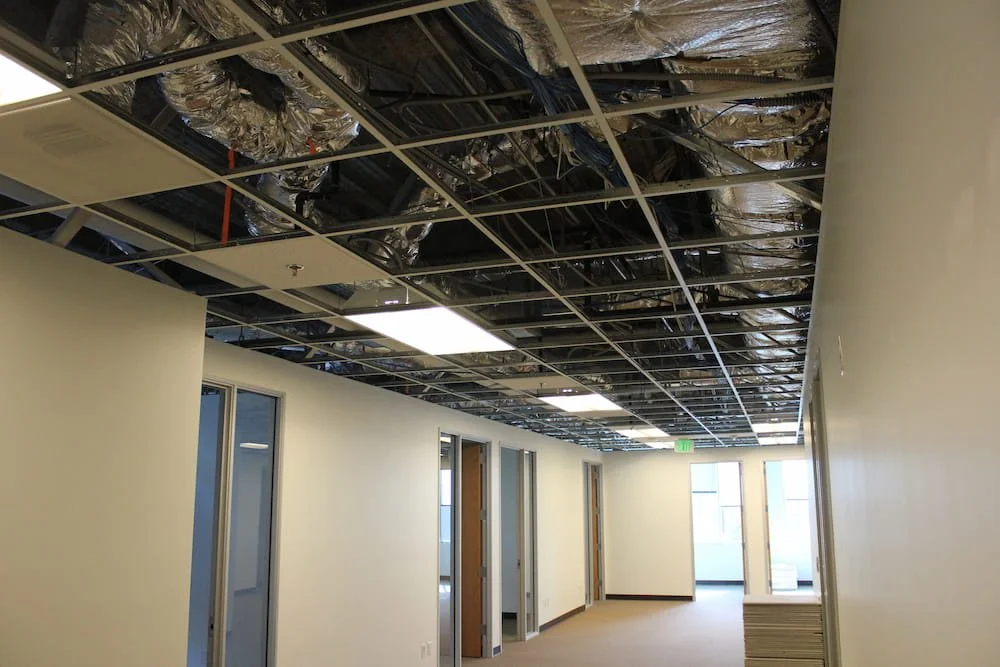
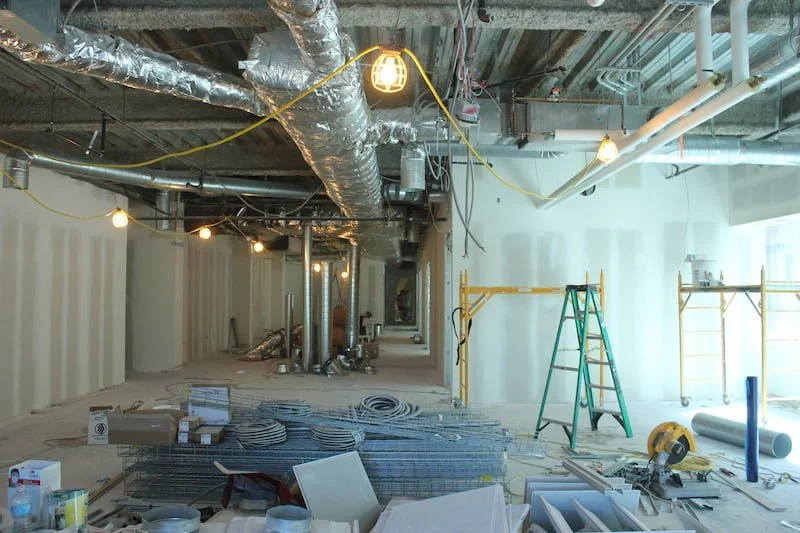
The first and most impactful decision was to completely remove the drop ceiling.
Those standard ceiling tiles weren't just boring—they were actively working against the space. By ripping them out, we:
Revealed the true ceiling height, adding valuable vertical volume
Exposed the existing MEP infrastructure (mechanical, electrical, plumbing, network systems)
Immediately transformed the feeling from compressed and confined to open and spacious
This single move fundamentally changed the character of the space. Suddenly, it felt larger, more honest, more industrial in the best way.
Step 2: Make Infrastructure Part of the Identity
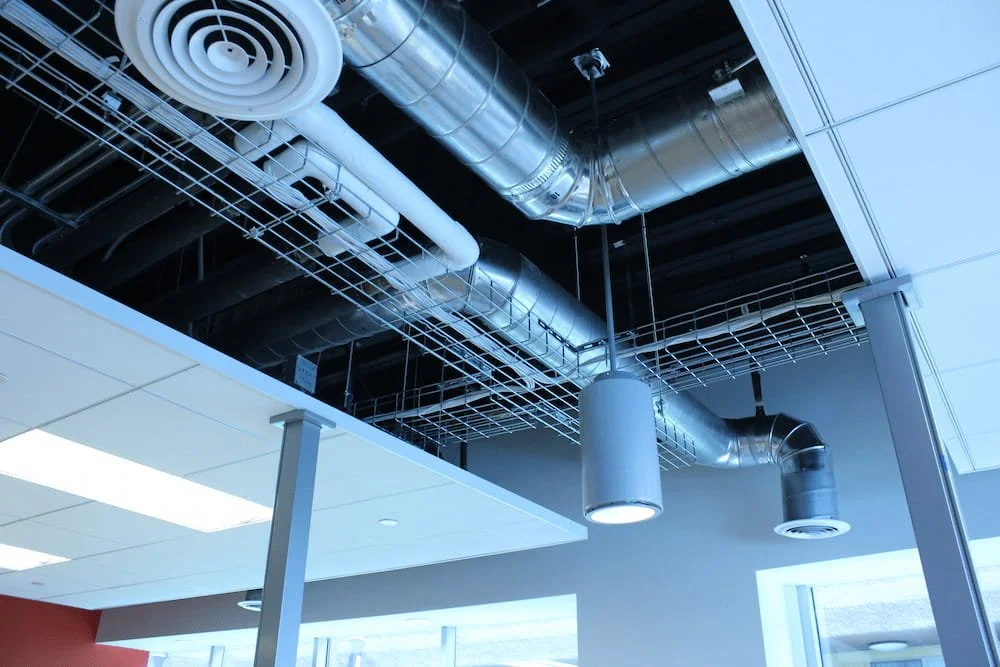
With the ceiling exposed, we had a choice: cover everything back up with new finishes, or lean into it.
We leaned in, but with intention.
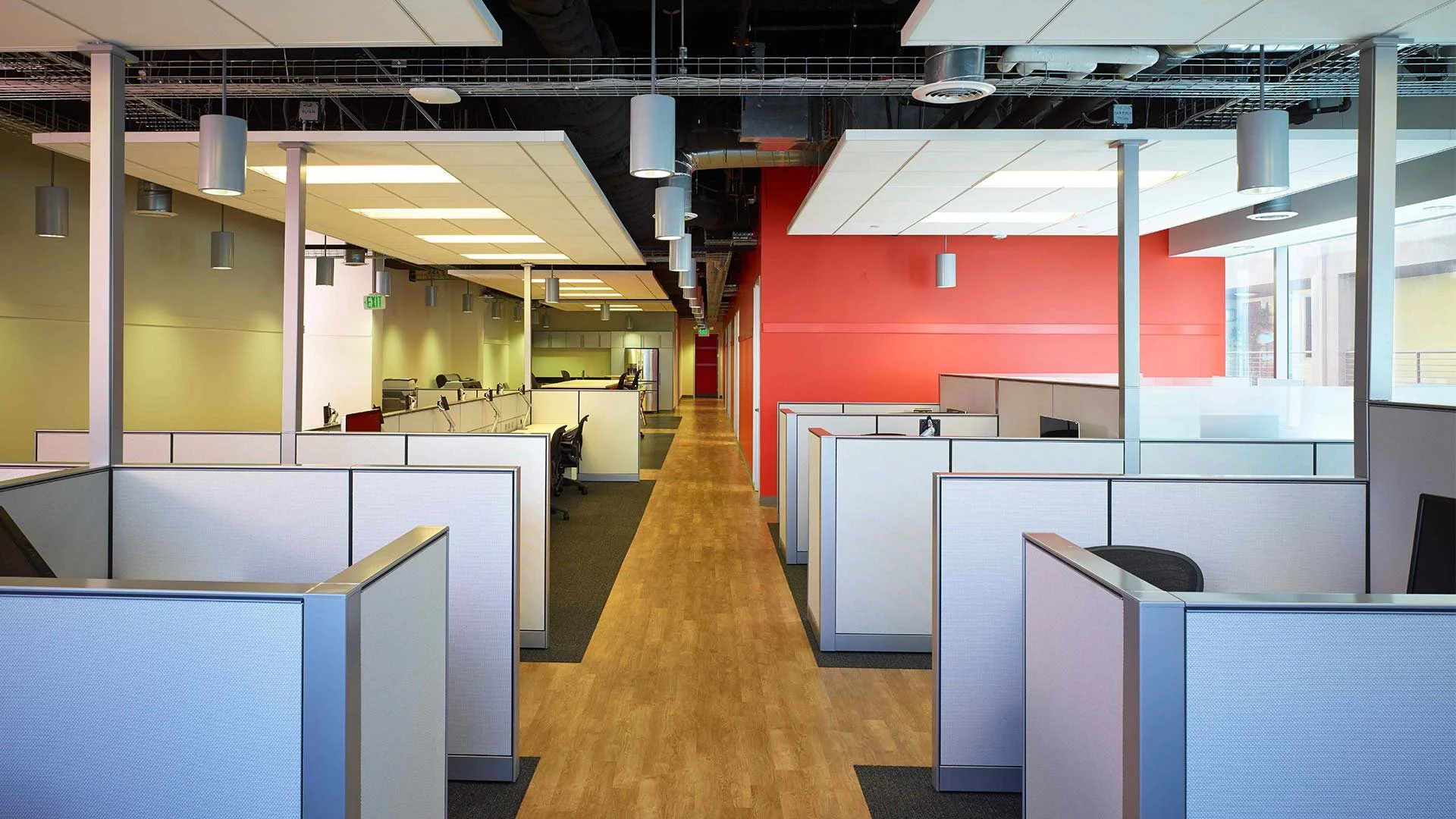
The exposed MEP systems became part of the visual language, but we didn't just leave them as-is. We painted everything black—conduit, ductwork, sprinkler lines, network cables. This wasn't about making the infrastructure the focal point; it was about making it recede visually.
By painting it all black, the systems blend together and enhance the feeling of height in the space. Your eye travels upward without getting caught on individual pipes or ducts. The ceiling feels higher, the volume feels greater, and the space reads as clean and intentional rather than unfinished.
For a CGI and animation studio, this approach still signals technical precision and a forward-thinking aesthetic. The industrial look is there, but it's refined. It's authentic to what happens in the space every day, technical, detailed, innovative without feeling raw or unpolished.
Step 3: Address the Acoustic Reality
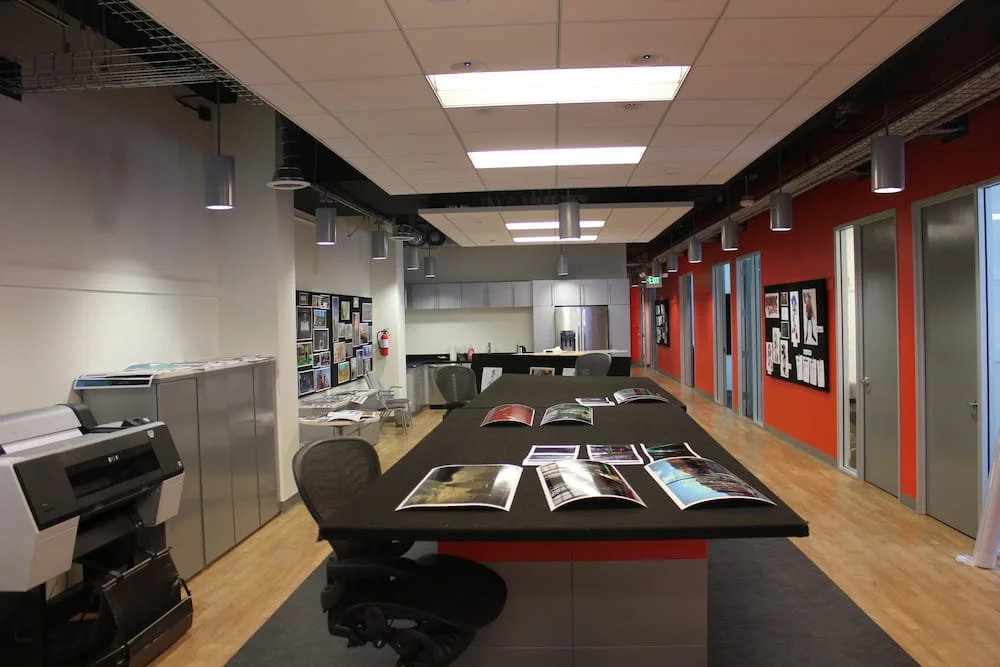
Exposing the ceiling solved the volume problem but created a new challenge: acoustics.
Hard surfaces (concrete, exposed metal systems, minimal soft finishes) reflect sound. In an open studio where multiple teams work simultaneously, that could become a problem fast. We needed acoustic control without putting up walls that would kill the open, collaborative feeling we'd just created.
The solution: Custom illuminated acoustic clouds.
Suspended throughout the workspace, these elements:
Absorb and control sound to prevent noise bleed between work zones
Visually define individual workstations without physical barriers
Provide ambient lighting to address the lack of natural light in the space
People can see across the studio. Movement and energy are visible, keeping that collaborative atmosphere alive. But sound is managed, so teams can focus when they need deep concentration.
Step 4: Zone Without Walls
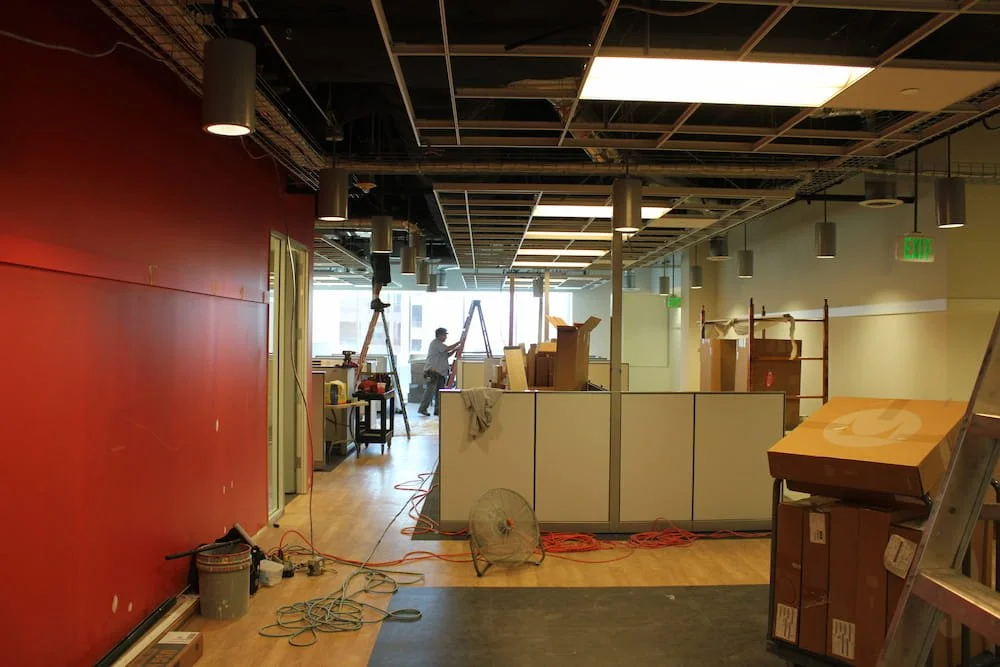
To further define different areas without creating barriers, we used strategic flooring materials. Work desk areas are denoted with carpet, providing acoustic benefit and visual definition for focused workspaces. Areas intended for circulation use light wood flooring, clearly signaling movement zones and creating visual contrast.
Different zones have distinct flooring that creates intuitive wayfinding and functional separation while keeping the space visually open and fluid.
You know what area you're in and what kind of work happens there, but nothing feels closed off or compartmentalized. The transition between carpet and wood is all the boundary you need.
Step 5: Infuse Brand Identity

Sega and Marza's corporate colors are woven intentionally throughout the design—from accent walls to furniture selections to smaller details.
In a space that started with zero personality, these brand elements provide visual interest and identity. But it's done subtly. The colors feel integrated, not slapped on. The workspace doesn't just house Marza; it expresses who they are and reinforces their culture daily.
This was critical to achieving the goal of making the space feel like a modern creative studio rather than a generic office.
The Result
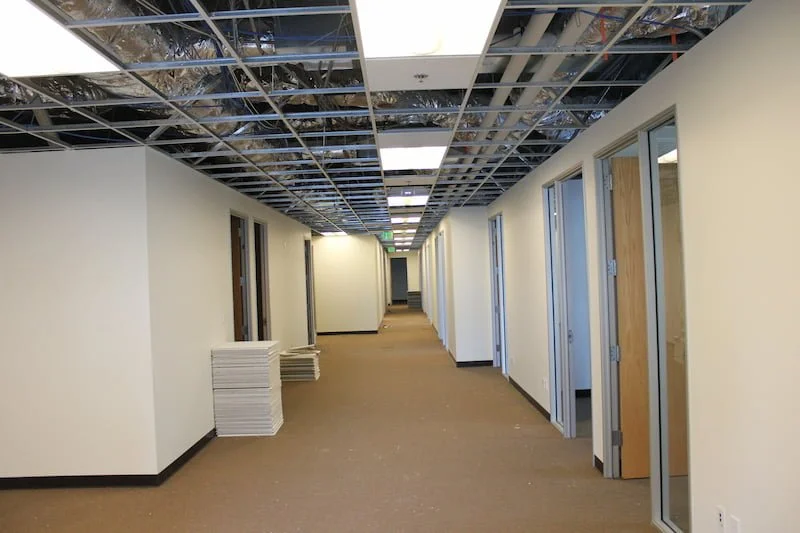
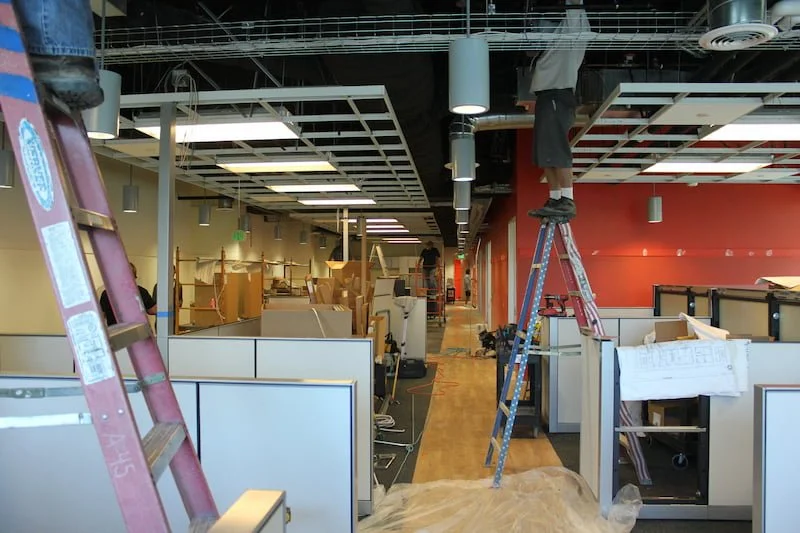
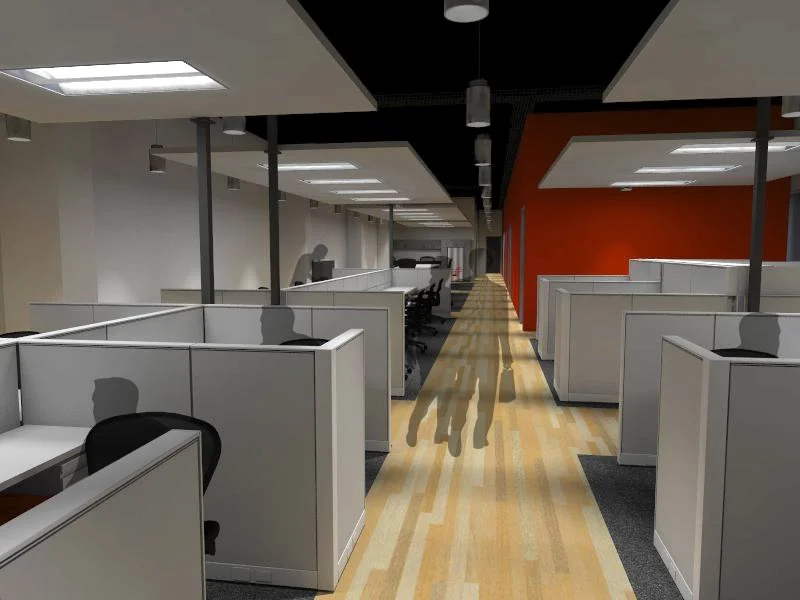
A production studio that energizes, inspires, and actually works.
The transformation is complete. What was once a forgettable, compressed office is now an open, dynamic creative environment. The exposed ceiling gives the space volume and character. The acoustic clouds provide functional sound control while adding visual warmth. The brand integration makes it distinctly Marza.
After operation, the space has proven its value both visually and functionally. That's the real test of thoughtful design.
“Daniel was a joy to work with and designed a fantastic, creative space for us in Burbank. Having been in the space he designed for us for over a year, we’ve experienced both the aesthetic and the functionality of what he’s done and we couldn’t be happier. We are constantly getting compliments. The space is fun, energizing and productive. Ziese Architecture gets my full endorsement!”
The Bigger Picture
What started as a generic, forgettable office became a testament to the power of thoughtful design. This project reveals a fundamental truth about workspace: an environment isn't just a container for work—it's an active participant in how creativity happens.
Every space has potential, even the most mundane. What matters is the ability to see beyond the existing conditions—to understand that walls, ceilings, and flooring aren't just physical barriers, but storytelling elements that can reflect a company's identity, culture, and creative spirit.
For Marza Animation Planet, the transformation was about more than aesthetics. It was about creating a physical environment that speaks the same language as the innovative work being produced inside. A space that doesn't just accommodate creativity, but actively nurtures it.
The most powerful design doesn't impose. It listens. It understands. It enables.
In the end, this project is a reminder that remarkable spaces aren't born—they're carefully, intentionally crafted. Whether you're working in animation, technology, or any creative field, your workspace can be a powerful tool for inspiration, collaboration, and innovation.
A blank canvas is an opportunity. And sometimes, all it takes is the vision to see what could be, rather than what is.