
Eighteen Months In: What Rebuilding After the Fires Actually Looks Like Now
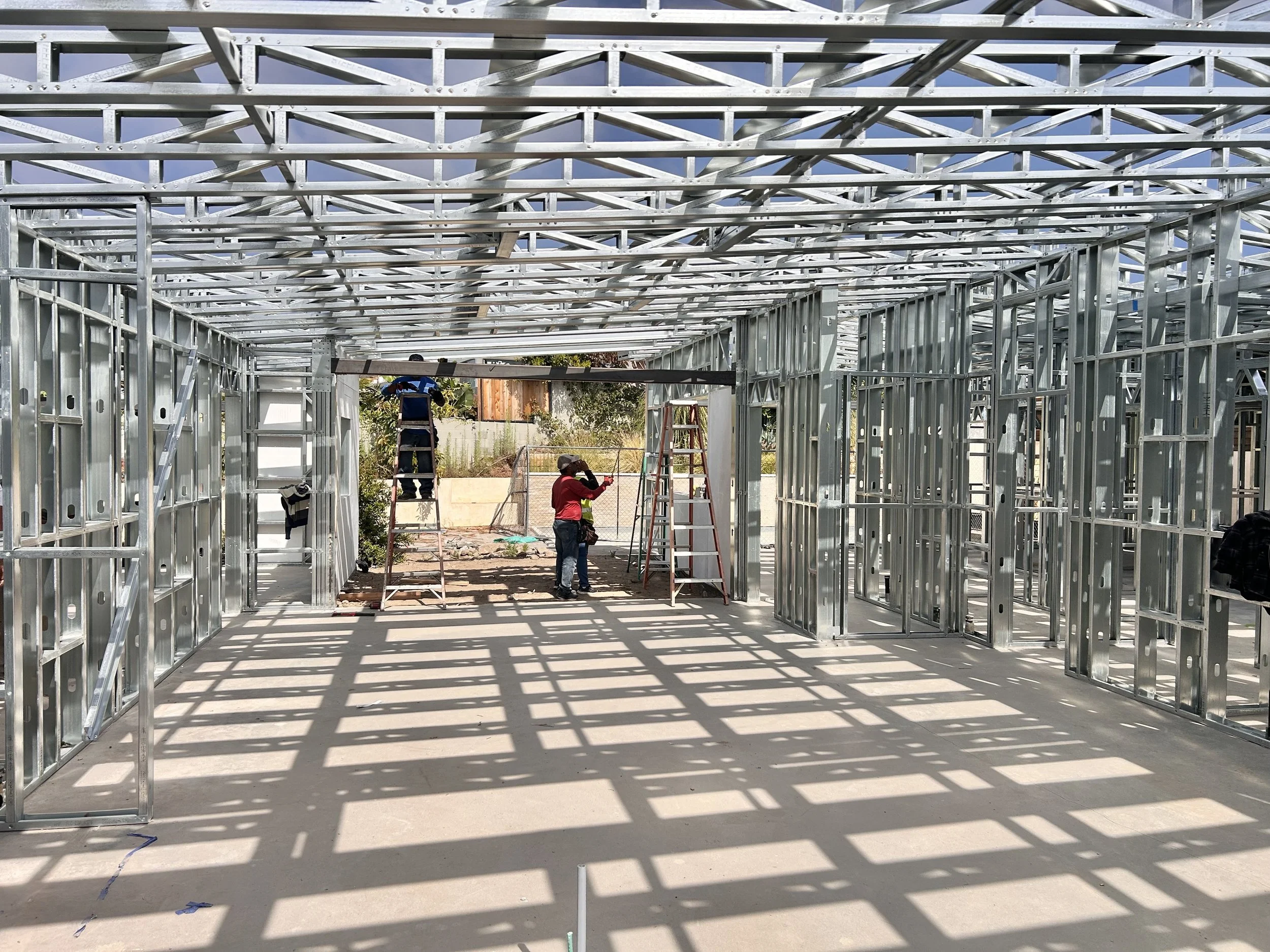
Construction Photo of Ziese Architecture Project in Malibu
It has been a year and a half since the Eaton and Palisades fires, and the picture on the ground has changed.
In the first months, nearly every conversation was about where to even begin. Today, driving through Altadena or the Malibu hills, you see the next chapter taking shape: cleared lots, fresh foundations, framing going up, and families beginning to move back home.
The rebuilding process is better understood than it was eighteen months ago. But the challenges have shifted, and knowing where they have shifted is often what separates homeowners making progress from those who remain stuck.
We can speak to this directly because we are living it every day. Along with a home we completed following the 2018 Woolsey Fire, we currently have rebuilds under construction in Altadena, in the hills of unincorporated Malibu, and along Pacific Coast Highway.
Here is what we are seeing eighteen months in—and what it means if you are still finding your way forward.
The Bottleneck Moved From Permits to People
Early on, everyone worried about permits.
Today, permitting is still real work, but it has been streamlined through expedited pathways and is no longer the primary obstacle for most homeowners.
The bottleneck now is capacity.
Altadena, Pacific Palisades, and Malibu are all rebuilding at the same time, competing for the same pool of contractors, crews, and specialty trades.
The lesson is somewhat counterintuitive: securing your team early often matters more than waiting for the perfect moment.
The homeowners moving fastest right now are the ones who got in line—with an architect and a builder—before the queue became longer. Waiting for certainty often means losing your place in it.
The Families Furthest Along Started Before Insurance Was Settled
This has been true from the beginning, and it is even clearer now.
The homeowners who are already framing homes or moving back in are, almost without exception, the people who began design and permitting in parallel with their insurance process—not after it.
You do not need a final settlement number to start understanding your property, your permit pathway, and your rebuilding options.
In fact, those early months are often the most valuable. They are the months the furthest-along families chose not to lose.
Altadena and the Coast Have Drifted Further Apart
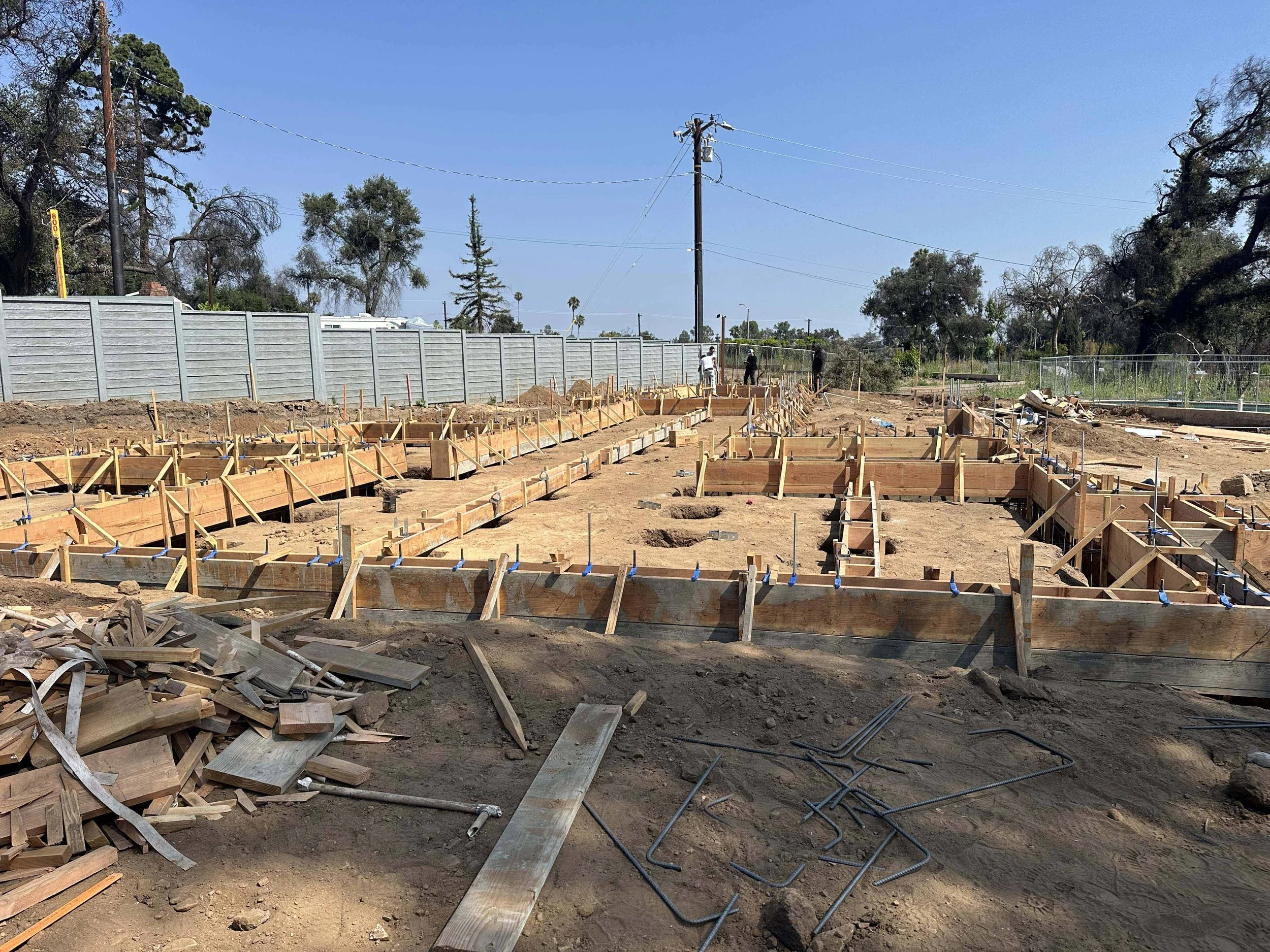
Construction Photo of Ziese Architecture Project in Altadena
Jurisdiction always shaped the rebuilding process.
Eighteen months in, the two worlds have diverged even more as their programs have matured.
In Altadena, which falls within unincorporated Los Angeles County, homeowners now have access to well-established accelerated pathways, including like-for-like rebuild provisions, County recovery programs, and pre-approved plan options.
Projects that fit within these pathways can often move significantly faster.
The coast and the Malibu hills remain a different landscape, where Coastal Commission requirements, slope conditions, geology, and site-specific constraints continue to shape timelines.
The practical takeaway is simple: the right strategy depends entirely on where your property is located.
The approaches that accelerate an Altadena rebuild are often not the same approaches that accelerate a coastal one.
The Insurance Gap Is the Quiet Stall
The most common place we see projects lose momentum today is not permitting or design.
It is the moment a homeowner realizes that their insurance settlement does not fully cover what the rebuild will actually cost.
That challenge is even more common now as updated fire-resilient construction requirements have raised the baseline standard for what is being built.
The gap is much easier to navigate when homeowners understand their true cost early—through an estimate grounded in current construction pricing—rather than discovering it midway through the process.
Knowing the number does not eliminate the gap, but it allows you to plan for it before it becomes a crisis.
What Is Going Back Up Is Fundamentally Safer
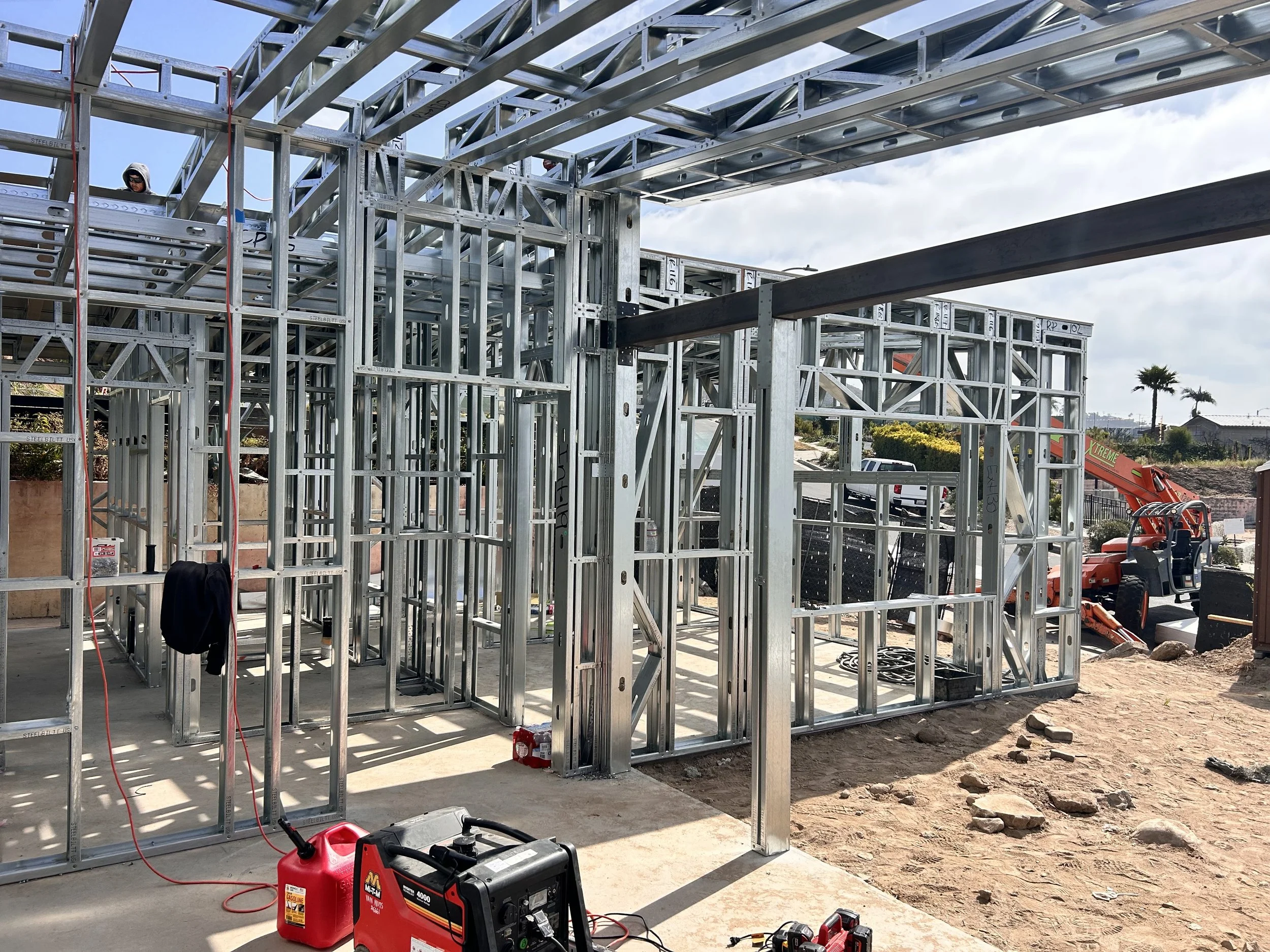
Construction Photo of Ziese Architecture Project in Malibu
One genuinely hopeful part of this chapter is that the homes rising today are far more resilient than the ones that were lost.
Updated Wildland-Urban Interface (WUI) standards, which took effect at the beginning of 2026, require more robust approaches to fire safety, including:
Noncombustible exterior materials
Ember-resistant detailing
Defensible-space planning
Improved fire-resilient construction practices
The neighborhoods rebuilding today are, quietly, being designed to better withstand the next wildfire.
That reality does not erase what was lost, but it does mean these communities are returning stronger than before.
It Is a Marathon—And People Are Reaching the Finish Line
If you are still early in the process, stalled by uncertainty, or simply overwhelmed, the most important thing we can tell you eighteen months in is this:
The finish line is real.
We have seen it firsthand.
We have watched families move back into homes rebuilt after the Woolsey Fire, and we are seeing others in Altadena and Malibu move steadily toward that same milestone today.
Progress remains uneven. It is slower than anyone wants. But it is happening.
And for many homeowners, the difference between moving forward and remaining stuck is often not a major breakthrough—it is simply understanding the next step.
If you would like a second opinion on where you stand—what your property allows, how to evaluate a contractor bid, or what your next move should be—we are happy to help, whether or not you ultimately work with us.
For current County recovery programs and updates, the official hub at LA County Recovery remains the best source of information. Our community is well into rebuilding, and we look forward to helping more families get home.
Ziese Architecture is a Los Angeles firm that has worked in wildfire recovery since the 2018 Woolsey Fire, with rebuilds currently under construction across Altadena and the Malibu coast. Principal architect Daniel Ziese is licensed in California (License C32234) and holds AIA, NCARB, and LEED AP BD+C credentials.