
Adaptive Reuse Projects Often Fail Long Before Design Starts
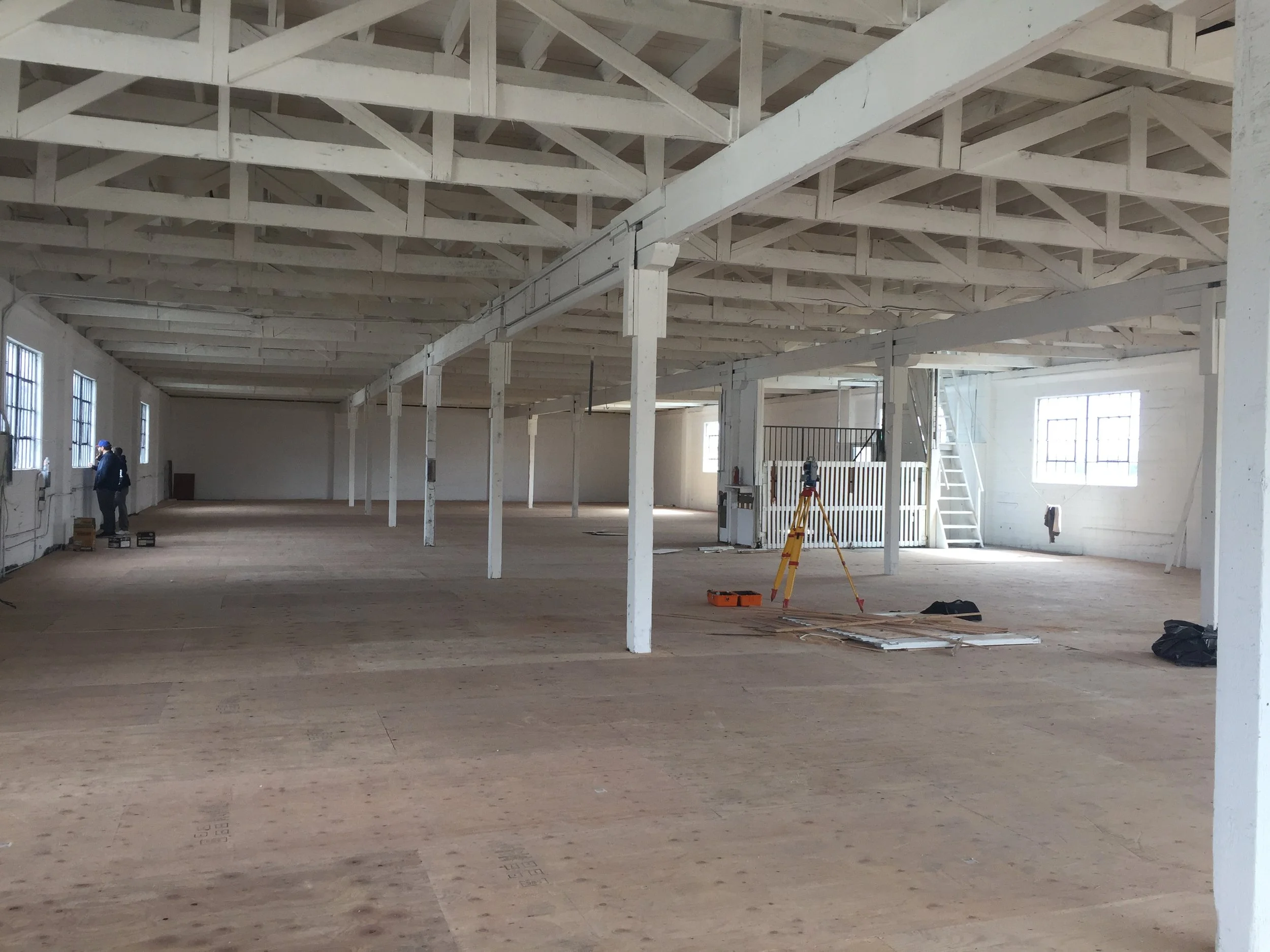
The Revery Under Construction
Most people assume adaptive reuse projects succeed or fail during design.
They usually do not.
In many cases, the project is already headed in the wrong direction before an architect draws a line, before a consultant team is assembled, and sometimes even before escrow closes. What kills these projects early is not usually a bad design idea. It is a bad assumption.
That assumption might be about what the structure can carry, whether the building can legally support a change of use, parking, access, code upgrades, utility capacity, egress, or whether the entitlement path is actually as straightforward as everyone hoped. By the time those realities are fully understood, a team may already be working from a pro forma, schedule, or acquisition basis that no longer makes sense.
That is why some adaptive reuse projects fail long before design starts.
The Real Risk is Usually Hidden
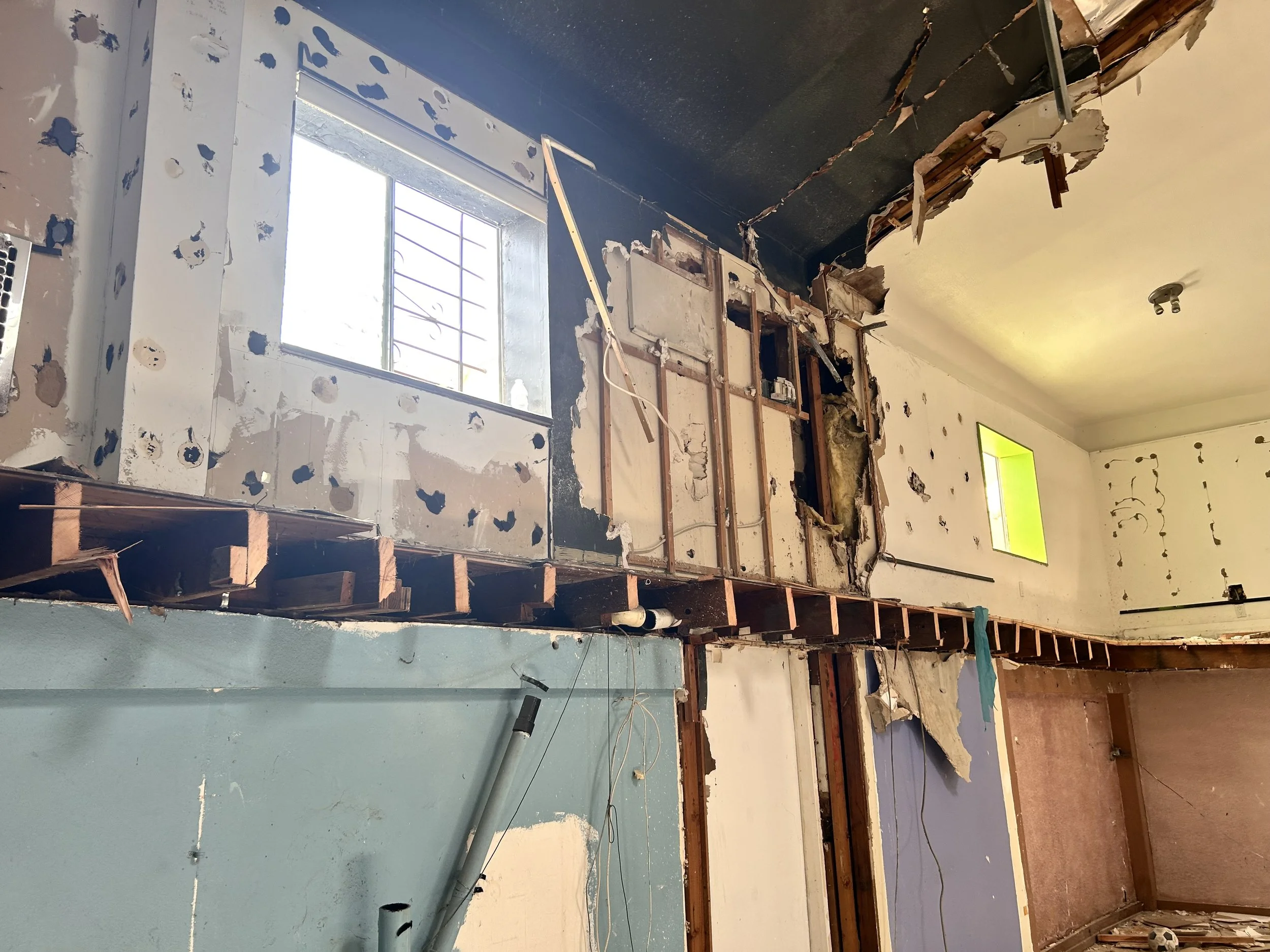
Demolition Exposing Existing Wall Conditions
With ground-up construction, you are starting with a relatively blank slate. Existing buildings are different. They come with constraints that are often partially visible, poorly documented, or misunderstood at the outset.
A building may look like a perfect candidate on paper. The location works. The massing seems usable. The purchase price makes sense. The vision feels obvious. Then the real conditions begin surfacing.
The floor plate may be too deep to make residential layouts efficient
Mechanical, plumbing, and electrical systems may need more replacement than expected.
Existing structural elements may interfere with the intended plan.
Accessibility upgrades may be more extensive than assumed.
There may be environmental issues, deferred maintenance, code violations, or loading and parking limitations that materially change feasibility.
This is the part of adaptive reuse that is easy to underestimate: the most expensive problem is often not what you can already see. It is what everyone assumed would be fine.
Good Adaptive Reuse Begins as Due Diligence not Design
The best adaptive reuse teams do not start by asking,“How do we fit the vision into the building?”
They start by asking,“What is this building actually capable of becoming?”
That is a different question, and it leads to a very different process.
A useful way to think about early-stage adaptive reuse is through four lenses:
Market demand
Access
Use
Finances
That means understanding not only whether a conversion is technically possible, but whether it is commercially viable, operationally functional, and approvable under the actual rules that apply to that building.
In practice, that often includes questions like:
Is the intended occupancy realistic for this structure?
What code triggers come with a change of use or occupancy?
How much of the existing envelope, structure, and circulation can actually be retained?
Are the planned layouts compatible with light, ventilation, egress, and core placement?
Will the project require upgrades that erase the financial advantage of reuse?
Is the approval pathway actually clear?
Those are not design-development questions.
They are project-definition questions.
In Los Angeles, the Regulatory Path Can Completely Change the Equation

This matters everywhere, but it matters especially in Los Angeles, where the approval path itself can shift feasibility.
The City of Los Angeles states that the Citywide Adaptive Reuse Ordinance expands eligibility beyond Downtown and that all buildings at least 15 years old may be eligible if they are located in certain zones. The same source states that the intent of the updated ordinance is to remove most zoning code barriers to reuse, allowing many projects to apply directly to LADBS, while some projects still require Administrative Review or a Conditional Use Permit depending on building age, historic status, and requested relief.
LADBS similarly states that the City’s Adaptive Reuse Program works by streamlining approvals and that it relaxes parking, density, and other typical zoning requirements, while providing flexibility in the approval and permitting process through fire and life safety measures.
That is exactly why early assumptions can be so dangerous. Two buildings that appear similar at first glance may not have the same entitlement risk, code pathway, or approval timeline once the real facts are known.
Code is Not a Footnote in Adaptive Reuse, it is the Framework
One of the biggest misconceptions in adaptive reuse is that code review happens after the concept is formed. In reality, code often determines whether the concept makes sense in the first place.
The 2021 IEBC states that it covers repair, alteration, addition, and change of occupancy for existing buildings while seeking appropriate safety levels without requiring full compliance with all new-construction provisions. It also identifies three compliance methods—prescriptive, work area, and performance—and includes provisions related to change of occupancy, fire safety, means of egress, accessibility, mechanical, plumbing, structural loads, and seismic loads.
That does not mean older buildings are impossible to work with. It means the team needs to understand early:
what code path exists
what upgrades may be triggered
where the major risk concentrations are likely to be
In other words, adaptive reuse is not just a design problem. It is a code and strategy problem with a design component.
Why Early Diligence Creates Value
When teams do this work early, they are not slowing the project down. They are protecting it.
They are reducing the chance of buying the wrong building for the wrong use. They are preserving optionality before major money is spent. They are exposing risk while there is still time to rethink the program, adjust assumptions, renegotiate, or walk away.
That is often where the real value is created.
Design absolutely matters. Great design can unlock efficiency, identity, and long-term project value. But in adaptive reuse, the highest-leverage work often happens before design begins—when the team is still deciding whether the building, the use, the economics, and the regulatory path actually align.
The Sustainability Case is Real, but it Does not Replace Diligence
Adaptive reuse is often discussed as a sustainability strategy, and that is true. But sustainability benefits do not remove the need for hard early analysis.
The AIA states that building reuse avoids embodied carbon associated with new construction and cites research showing reuse can avoid 50–75% of embodied carbon because projects often retain the foundation, structure, and building envelope. The same source states that approximately 1 billion square feet of buildings are demolished and replaced each year in the United States.
Those benefits are real. But they only become meaningful project outcomes if the building is actually viable for the intended use. That is why responsible adaptive reuse is not just about preserving what exists. It is about understanding what exists clearly enough to make good decisions.
The Best Projects Start with Questions
The most successful adaptive reuse teams do not fall in love with a concept too early.
They study the building first.
They test the assumptions.
They look hard at the regulatory path, the physical constraints, the cost implications, and the real operational fit.
They let the building tell them what is possible before forcing a vision onto it.
That does not make the process less creative. It makes the creativity more informed.
And in adaptive reuse, informed creativity is usually what separates a promising idea from a project that actually works.