
Can You Rebuild a Coastal Home After Severe Erosion?

Watching the ground disappear beneath your home raises immediate questions: Is it safe? Can the foundation be repaired? Can you rebuild on the same property?
There is no reliable answer based on appearance alone. Coastal foundation design must account for supporting soils, erosion, scour, and the forces acting on the building. The investigation needs to look beyond visible damage to establish what support remains and what future construction would require.
For an owner deciding what to do next, three questions should guide the assessment:
Can the site safely support the proposed construction?
What work can be approved?
Does the complete project make financial sense?
The purpose of an early feasibility assessment is to bring those questions together before committing to a rebuilding design.
Why an Intact House May Still Have a Foundation Problem
Flooding and erosion can affect a property differently. Water may damage a building’s interior, while erosion removes ground around or beneath its foundations. Scour is localized soil loss, often around foundation elements; erosion can lower the ground surface over a wider area. Both can change foundation performance.
A home that remains standing should therefore not be assumed to have adequate support for future conditions. Coastal engineering guidance emphasizes that foundation depth, strength, and soil support must account for anticipated erosion and scour, not simply the ground elevation visible today.
The question is not just whether the house survived. It is whether the remaining foundation can perform under the conditions it may now face.
What Should You Do First?
If the property appears unstable or access may be hazardous, prioritize safety rather than entering the site to document damage. Seek direction from local emergency or building officials.
For reconstruction planning, a useful starting point is to assemble the information you already have: previous architectural and structural drawings, surveys, geotechnical reports, permits, and photographs of changed conditions.
We recommend organizing the initial evaluation around three connected areas:
Site investigation. Establish what has changed and what additional geotechnical or coastal-hazard investigation is needed. Coastal foundation guidance calls for site-specific consideration of soils, flood conditions, and short- and long-term erosion.
Structural evaluation. Determine which existing foundation components can be evaluated for reuse and what support a repaired or replacement building would require.
Approval review. Identify the applicable jurisdiction and distinguish the proposed building work from grading, bluff work, or shoreline protection. The California Coastal Commission advises owners proposing shoreline protection or bluff work to contact both local government and Commission staff.
These investigations should inform one another. A foundation concept is less useful if the work needed to construct or protect it has no established approval path.
Beachfront and Bluff-Top Homes Need Different Assessments
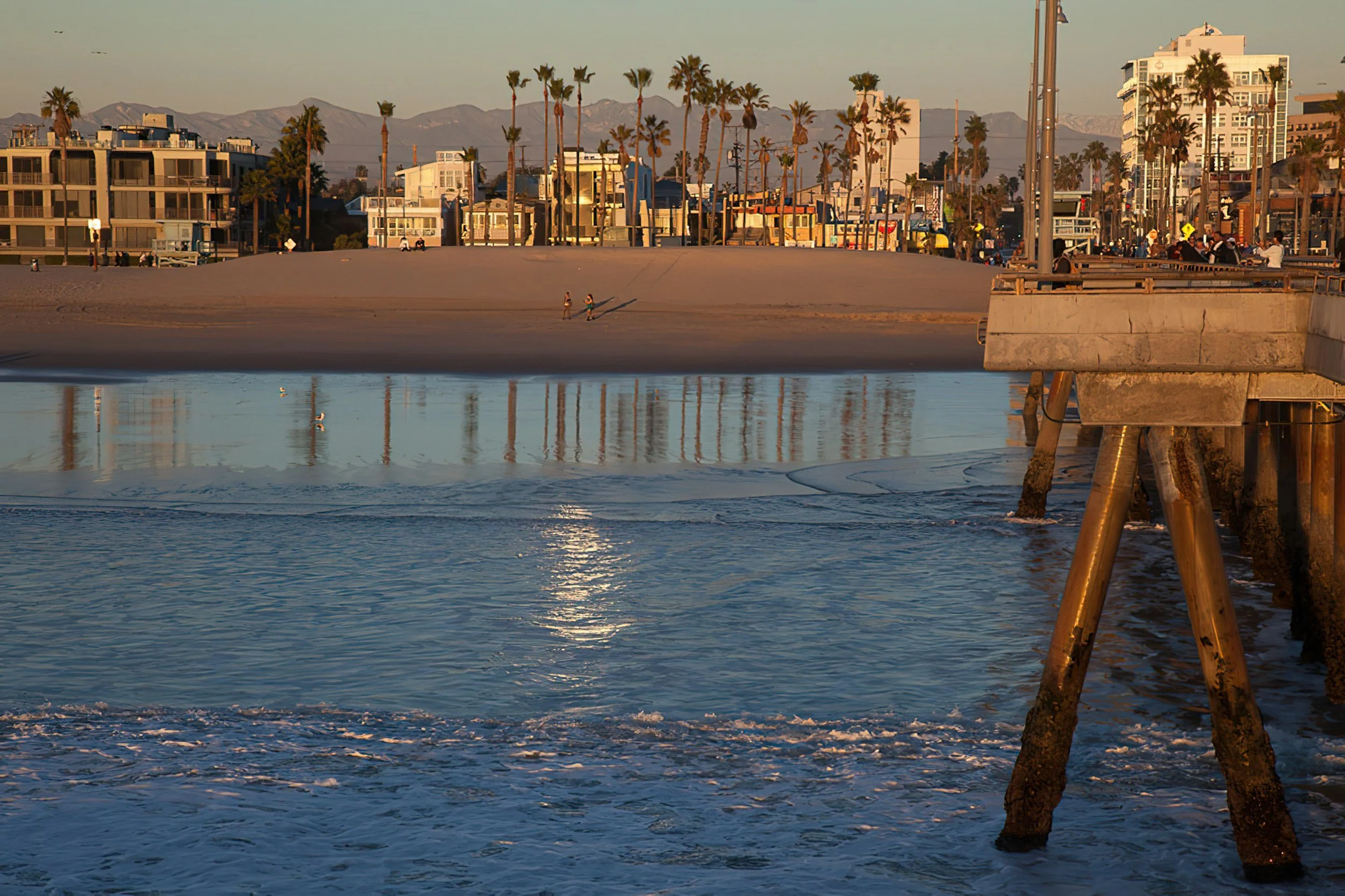
A foundation strategy for a beachfront home should not be assumed to solve a bluff-stability problem.
For beachfront construction, relevant hazards include wave action, moving floodwater, erosion, and scour. These conditions influence foundation selection, embedment, and structural loading.
For bluff-top properties, the assessment must also address geologic stability and the relationship between development and the bluff. California Coastal Act §30253 addresses structural integrity, erosion, geologic instability, and development that would require protective devices substantially altering natural landforms along bluffs and cliffs.
Whether you own a property in Malibu, Laguna Beach, Dana Point, San Clemente, or coastal San Diego County, start with your parcel’s conditions rather than a solution used at a neighboring home. Site characteristics and subsurface information are central to selecting an appropriate foundation system.
Can Exposed or Damaged Foundations Be Repaired?
Exposed foundations warrant investigation, not an automatic conclusion that the property is either rebuildable or beyond repair.
Depending on the findings, engineers may evaluate deep foundations such as driven piles or caissons, reinforced grade beams connecting foundation elements, or elevated structural systems. Coastal engineering guidance describes deep foundations as more resistant to erosion and scour than shallow systems, while emphasizing that their suitability depends on the site and design conditions.
These are not interchangeable solutions. Foundation design must address vertical and lateral loads, wave and flood forces, connections, and the support remaining after anticipated soil loss. Grade beams also require careful evaluation: if exposed to moving floodwater, they can obstruct flow and increase localized scour.
Having piles or piers does not, by itself, establish that a foundation is adequate. Pile dimensions and embedment both matter; increasing one does not necessarily compensate for an inadequacy in the other.
For homeowners, the useful outcome is a support strategy grounded in investigation, not a promise that a particular foundation type will make rebuilding possible.
Why a Structurally Feasible Home Can Still Face Permitting Obstacles
Approval to rebuild a residence and approval to install new shoreline protection are not necessarily the same thing.
Three Coastal Act provisions help explain why.
Structural safety and coastal hazards: §30253
Where applicable, §30253 requires new development to minimize risks in areas of high geologic, flood, and fire hazard. It also requires stability and structural integrity without significantly contributing to erosion or geologic instability, or requiring protective devices that substantially alter natural landforms along bluffs and cliffs.
This means the regulatory question can extend beyond whether an engineer can support the house. The location and consequences of the proposed development also matter.
Shoreline protection: §30235
Section 30235 addresses seawalls, revetments, cliff retaining walls, and other construction that alters natural shoreline processes. It provides for such protection when required for specified purposes, including protecting existing structures or public beaches endangered by erosion, and when designed to eliminate or mitigate adverse impacts on local shoreline sand supply.
A proposed seawall should not be treated as an automatic accessory to a replacement home. Its eligibility and impacts need their own evaluation.
Disaster replacement: §30610(g)
The ordinary statutory disaster-replacement exemption has specific conditions. These include the same use, the same location, compliance with applicable existing zoning, and increases of no more than 10 percent in floor area, height, or bulk. The statute also includes replacement of qualifying preexisting erosion-control structures or devices similar to those present before the disaster.
That distinction matters: replacing a qualifying existing protective device is different from assuming that an entirely new protective system is exempt.
The practical recommendation is to define the complete scope early: the residence, foundations, grading, relocation, and any protective works. Then establish which approval or exemption applies to each component.
What Happens When Erosion Affects an Approved Fire Rebuild?
For homeowners rebuilding in Malibu or Pacific Palisades after the January 2025 fires, the ordinary disaster-replacement exemption is not the whole regulatory picture.
State executive orders suspended Coastal Act permitting requirements for qualifying wildfire reconstruction. Subsequent provisions expanded eligibility, including certain zoning-compliant single-family rebuilds that are not like-for-like replacements. These special pathways should not be confused with the ordinary §30610(g) exemption.
If erosion changes the site after a reconstruction design was prepared, we recommend reviewing two issues separately:
Does the approved foundation design still respond to current site conditions?
Does the revised scope remain within the applicable wildfire-rebuilding pathway?
Do not assume that every foundation revision or relocation automatically requires a new coastal permit. Equally, do not assume that a qualifying fire rebuild automatically covers additional work responding to later erosion. Have the responsible jurisdiction confirm how the revised scope will be treated.
Does Emergency Protection Allow Permanent Reconstruction?
Emergency authorization is not the same as permanent approval.
The California Coastal Commission explains that emergency permits authorize temporary measures needed to address an immediate threat. Development intended to remain over the longer term requires regular coastal authorization where applicable.
Owners should contact the responsible agencies before undertaking protective work. Even temporary measures such as sandbags, sand berms, or beach nourishment may require a permit, depending on the circumstances.
For planning purposes, keep immediate protection and permanent reconstruction as distinct scopes. Understand what an emergency authorization permits and what remains unresolved.
What Should a Rebuilding Budget Include?

Before deciding to proceed, ask for a preliminary budget that addresses more than the replacement house.
For planning, consider allowances for:
Surveys and site investigations
Geotechnical, structural, and coastal engineering
Demolition and temporary protection
Specialized foundations and site work
Permitting and consultant coordination
Construction access and contingencies
Treat this as a project-specific budgeting framework, not a prediction that every item will apply.
The early decision should be whether the likely scope, unresolved approvals, and available funding support moving into detailed design.
Start With a Clear Assessment of Your Property
A useful feasibility assessment should leave you with a clearer understanding of:
What is known about the damage and remaining support
Which investigations are still needed
Which reconstruction approaches warrant further study
What approval pathways require confirmation
What uncertainties could change the budget or your decision to rebuild
Ziese Architecture’s residential experience includes a Malibu replacement home following the 2018 Woolsey Fire, along with wildfire-reconstruction work in the Malibu hills and along Pacific Coast Highway. That experience provides a relevant foundation for discussing difficult residential sites and reconstruction decisions without suggesting that every coastal property has the same solution.
Considering repairs or rebuilding after coastal erosion? Schedule a Feasibility Consultation with Ziese Architecture to discuss your property, available records, and the investigations needed to evaluate a path forward.
Resources for Coastal Property Owners
For current conditions, emergency guidance, and permitting information:
This article provides general information, not a determination of structural safety, permit eligibility, or insurance coverage for an individual property.