
Permit Set vs Bid Set: What a Permit-Ready Architectural Package Includes—and What It Doesn’t
In both residential and commercial construction, architectural documentation is often grouped into two broad categories:
Permit-Only Sets and Full Bid Sets
A Permit-Only Set is designed primarily to obtain permit approval. A Full Bid Set is designed to reduce contractor assumptions, improve pricing accuracy, and provide greater construction certainty before work begins.
Understanding the difference between these two approaches is critical. Selecting the appropriate level of documentation impacts cost, risk, coordination, and how smoothly a project moves from permit approval into construction.
Permit-Only Set vs Full Bid Set
A Permit-Only Set is intentionally limited. Its purpose is to obtain permit approval.
A Full Bid Set is intentionally expanded. Its purpose is to reduce pricing risk, improve contractor coordination, and define construction expectations before work begins.
Neither approach is automatically better.
The appropriate choice depends on:
project complexity
owner experience
contractor involvement
the level of certainty required before construction
What is a Permit Set?
A Permit Set—often referred to as a Permit-Only Architectural Package—is a set of drawings prepared for submission to a building department to obtain permit approval.
Its primary purpose is to demonstrate compliance with building codes, zoning requirements, life-safety regulations, and other jurisdictional standards.
It is not intended to fully define construction execution or pricing.
A typical permit set may include items such as:
Site plan
Floor plans
Exterior elevations
Building sections
Code summary / life-safety notes
Accessibility information
Energy compliance documentation where required
Baseline coordination with structural, MEP, or other required consultants
That means the permit set is primarily a regulatory approval tool. It is meant to get the project through review and into a status where construction can legally proceed. It is not automatically a fully developed construction manual.
What a Permit Set Usually Does Not Include
This is where many clients need more clarity.
A permit set can be sufficient to obtain approval, but it often does not fully define every material, finish, fixture, assembly, coordination condition, or pricing assumption that will matter once contractors start bidding or building. AIA guidance notes that more detailed material, window, door, and construction information typically develops as the project moves beyond earlier drawing phases into design development and construction documents.
For example, a permit set may show:
the location of a bathroom
required clearances
plumbing fixture counts
accessibility compliance
door swings
basic partition layout
But it may not show:
which tile is being used
the exact paint system
the selected faucet or shower trim
mirror type
accessory locations beyond code minimum
specialty lighting
cabinet finish
stone slab selections
whether the shower niche is aligned with grout joints
whether the wall base wraps into a recessed jamb
the exact installation standard expected by the owner
That kind of information usually belongs in interior design, expanded documentation, or a more detailed construction/pricing package, not in a basic permit-only scope. This practical distinction is consistent with industry guidance that permit drawings may show restroom layout and code-required clearances without specifying the faucet model or tile pattern, while more detailed construction documents are where finishes, fixtures, and exact design intent are fully defined.
The same is true in commercial work. A permit set for a restaurant, tenant improvement, or brewery may show the required room layout, code path, egress, accessibility, and consultant coordination necessary for approval.
But it may not fully resolve:
equipment model coordination
final finish selections
millwork detailing
countertop build-ups
specialty lighting layout
acoustical treatments
integrated signage details
decorative assemblies
detailed back-of-house coordination
field tolerances between trades
Those items often require additional scope depending on the project’s complexity, the contractor’s experience, and the owner’s expectations.
A Permit-Only Set is not a lesser level of professional service.
It is a narrower scope of professional service.
The focus is permit approval rather than:
construction pricing
finish selection
detailed coordination
construction administration
Many projects operate successfully with this approach.
Others benefit from additional documentation before construction begins.
What Is a Bid Set?
A bid set—sometimes called a pricing set or an expanded construction document package—is a more detailed set of drawings prepared so contractors can price the work more accurately. The purpose is different from a permit set. Where a permit set is primarily about regulatory approval, a bid set is about clarity, coordination, cost certainty, and reduced assumptions during pricing. AIA describes the construction documents phase as producing drawings with greater detail and construction specifications, and notes that those documents are then sent to contractors for pricing or bidding where that is part of the project process.
A bid set may include everything in the permit package, plus:
expanded wall sections and construction details
door and window schedules
detailed interior elevations
finish information
fixture selections
equipment coordination
more developed consultant integration
written scope clarification for trades
specification language or keyed product standards
details that reduce contractor interpretation gaps during bidding
That additional specificity matters because accurate and coordinated drawings and specifications improve bid quality, reduce misinterpretation, and help minimize RFIs, rework, and change orders. AIA guidance specifically notes that when construction documents need more detail, bid accuracy suffers and schedule and budget impacts tend to follow.
Why the Difference Matters
A common project mistake is assuming that“permit-ready” means “fully ready for contractor pricing and construction.”
Sometimes it does. Often it does not.
If a contractor is bidding from permit-level drawings only, the contractor may have to make assumptions about:
finish quality
assembly types
fixture allowances
product substitutions
incomplete consultant coordination
unresolved field conditions
owner preferences not yet documented
That creates risk. When some of those assumptions turn out to be wrong, the result can be:
inconsistent bids between contractors
large pricing spreads
more RFIs
more change orders
construction delays
disputes about who was responsible to define what
In simple terms:
Less information at the pricing stage usually means more uncertainty during construction. Clearer drawings and specifications help reduce that risk.
Who Typically Uses a Permit-Only Set?
Permit-Only Sets are commonly used by:
Developers
Owner-Builders
Experienced Property Owners
General Contractors
Commercial Property Owners
Business Operators with established project teams
These clients often:
Already understand the project they want to build
Already have consultants or contractors available
Are comfortable making decisions during construction
Do not require a fully developed construction documentation package before obtaining permit approval
For these clients, a Permit-Only Set is often the most efficient and appropriate scope.
Who Should Consider a Full Bid Set?
A Full Bid Set may be worth considering when:
This is your first construction project
Multiple contractors will be pricing the work
Budget certainty is important
The project contains extensive custom detailing
Finish selections significantly affect cost
Multiple trades require extensive coordination
Lenders, investors, or internal stakeholders require greater documentation
The owner wants fewer assumptions carried into construction
In these situations, additional documentation often:
reduces risk
improves pricing accuracy
creates greater certainty before construction begins
What Is Typically Included in a Permit-Only Architectural Package
A permit-only package is usually designed around the documentation required for permit submission and approval.
Depending on the project, that often includes:
site review and existing condition assessment
zoning and code review
permit drawings
coordination with required consultants at a baseline level
plan check responses
permit-ready submission package
For many projects, that is the right level of service.
If the project is straightforward, the contractor is experienced, the owner is comfortable making decisions during construction, and the overall scope is well understood, a permit-ready package may be enough to move forward effectively.
That is often true for:
relatively simple residential remodels
straightforward additions
some ADUs
tenant improvements with experienced ownership and contractor teams
commercial work where many finish and coordination decisions are already known or can be handled by others
What is Typically Not Included
This is where the scope needs to be stated clearly.
A permit-only architectural package often does not include:
permit processing / expediting
structural engineering fees
surveying
civil engineering
interior design
expanded construction detailing
comprehensive pricing documentation
construction administration
contractor coordination beyond baseline scope
field problem solving throughout construction
unlimited revisions after the permit set is complete
Those services may still be needed. They are simply not automatically part of the base permit package.
That distinction is important because it allows owners to choose the right scope intentionally instead of assuming every project needs the same level of service.
Real Example: Bathroom Finishes

Bathroom of Larchmont Residence
A bathroom is one of the easiest places to understand the difference.
A permit set may show:
wall locations
door size and swing
sink, toilet, and shower locations
required clearances
accessibility dimensions where applicable
ventilation requirements
waterproof assembly notes only where necessary for compliance
But a permit set may not define:
which tile is used on the floor or walls
the exact tile size and pattern
grout color
where tile stops and paint begins
shower glass type
faucet model
vanity finish
countertop material
mirror size and mounting height unless specifically required
decorative lighting
recessed accessories
cabinet hardware
coordination between selected products and framing tolerances
If those items matter before bidding or before construction begins, then the project likely needs either:
interior design
expanded documentation
or a more detailed pricing / construction package
Otherwise, some or all of those decisions may be left to be figured out during construction, often by a combination of owner decisions, contractor assumptions, product availability, and field conditions.
That is not always wrong. But it should be intentional.
Real Example: Commercial Tenant Improvement
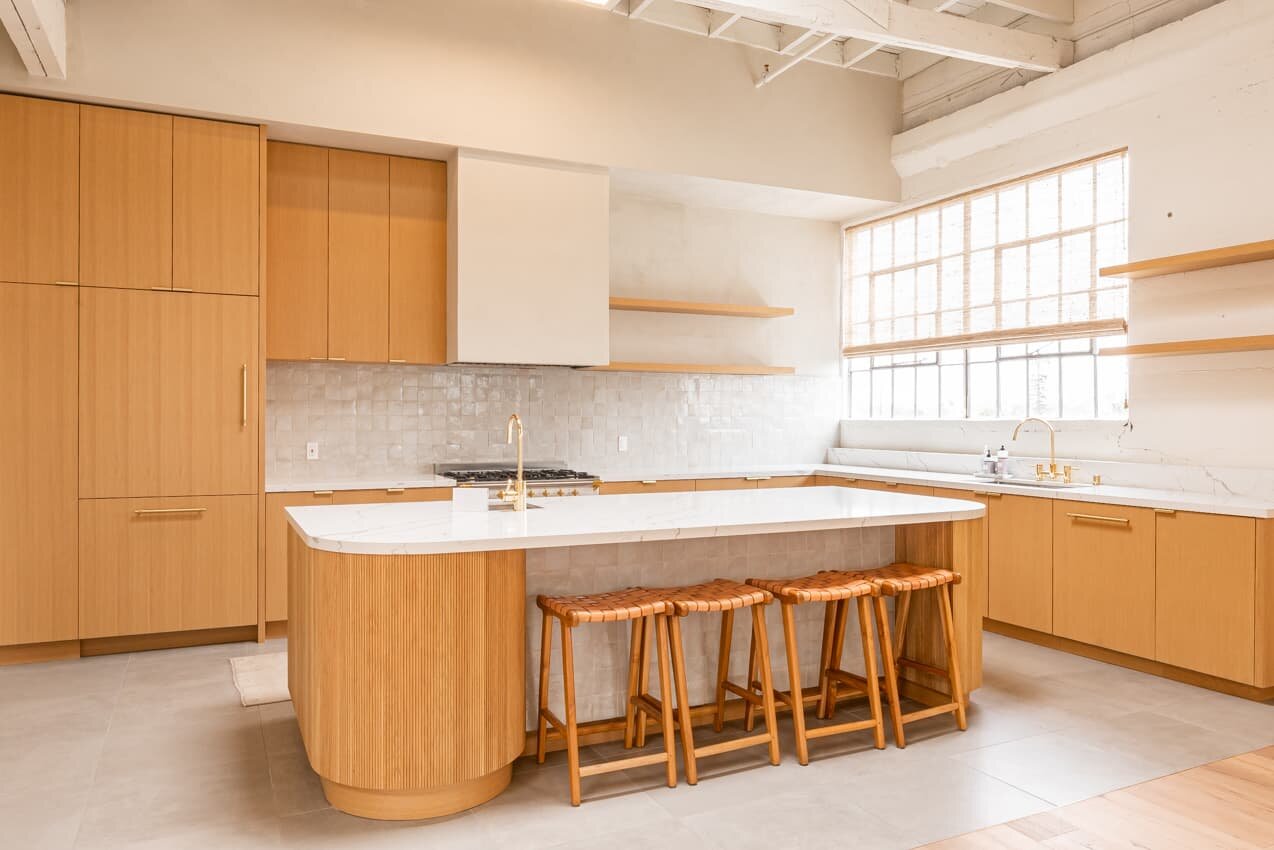
The Revery Kitchen
A similar issue shows up in commercial projects.
Take a restaurant or retail tenant improvement. A permit package may show the layout needed for review:
occupancy and egress
accessible restroom layout
kitchen or service area planning at permit level
mechanical and plumbing coordination required for approval
fire-life-safety information
basic code compliance
But there may still be major unanswered questions that affect cost and construction, such as:
final front-of-house finishes
millwork detailing
owner-furnished equipment coordination
decorative lighting selections
detailed bar assemblies
final tile or wall panel layouts
acoustical treatment details
custom signage integration
detailed soffit transitions
specialty manufacturer coordination
If those items are important to pricing accuracy, schedule reliability, or design quality, they usually need to be developed as additional scope, not assumed to be fully included in a permit-only package.
Additional Services That May Be Needed
One of the biggest misconceptions in architecture is that scope is either full service or not enough. In reality, many projects work best when services are structured modularly.
Depending on the project, common add-on services may include:
Interior Design
Needed when finish selections, fixture selections, material palettes, bathroom detailing, cabinet design, decorative lighting, or visual design intent need to be defined before construction.
Expanded Documentation
Useful when the permit set needs to be supplemented with additional wall sections, details, schedules, and notes to reduce contractor assumptions.
Construction Pricing Package / Bid Set
Helpful when multiple contractors are bidding, cost certainty matters, or the owner wants fewer pricing gaps and allowances.
Structural Engineering
Often required for structural scope, but commonly contracted separately or treated as a separate consultant fee.
Permit Processing / Expediting
Helpful when the owner wants support managing submission logistics, agency comments, routing, and follow-up.
Consultant Coordination
Sometimes basic coordination is enough. Other times the project needs deeper integration across structural, MEP, civil, kitchen, signage, accessibility, acoustics, or specialty consultants.
Construction Administration
Needed when the owner wants architectural support during construction, including RFIs, submittal review, site visits, clarification sketches, and issue resolution.
Site Survey / As-Built Documentation
Often needed when reliable existing conditions are not already available.
These services are not “extras” in the sense of being unnecessary. They are simply not always needed on every project, and some clients benefit from choosing them only when the project conditions justify them.
When Will You Know Which Consultants Are Required?
Consultant requirements are typically not known at the time of initial project inquiry. They become clearer during the Project Assessment and initial design development phase, once the scope, existing conditions, occupancy, and code requirements of the project are better understood.
Common patterns by project type:
Structural Modifications
Projects involving structural work require a licensed structural engineer. The extent of structural scope is usually not confirmed until after site review and initial design development.
Commercial Tenant Improvements
Most commercial TIs require MEP engineering and energy compliance (Title 24). The specific consultants depend on the scope of work, building systems, and occupancy type.
Adaptive Reuse and Change of Occupancy
These projects frequently require multiple consultant disciplines. The full list depends on the new use, building systems, code path, and existing conditions — all of which are assessed during Project Assessment.
Ziese Architecture advises on likely consultant requirements following the Project Assessment and initial design review. Consultant fees are separate from the architectural scope and are identified as part of the project proposal.
When a Permit Set Alone May Be Enough
A Permit-Only Set may be sufficient when:
the project is straightforward
the scope is well understood
the contractor is experienced or involved early
the owner is comfortable making decisions during construction
speed to permit is the priority
customization is limited
In these cases, a Permit-Only Set can provide an efficient path from design to permit approval and into construction.
When a Full Bid Set Is Worth It
A Full Bid Set is best viewed as a risk-reduction tool rather than simply a larger drawing package.
Its value comes from:
reducing assumptions
improving pricing accuracy
creating greater certainty before construction begins
A Full Bid Set may be appropriate when:
the project requires detailed pricing
contractors are bidding competitively
coordination between trades is complex
design intent must be clearly fixed before construction
cost control is critical
A Practical Way to Think About It
Permit-Only Set = Approval Tool
Full Bid Set = Pricing and Risk-Reduction Tool
One helps get the project approved.
The other helps define how the work is priced, coordinated, and carried out.
Some projects need only the first.
Others benefit significantly from both.
Is a Permit-Only Set Right for Your Project?
If you are:
A developer
An owner-builder
An experienced property owner
A contractor
A business operator with an established project team
a Permit-Only Set may provide exactly the level of architectural service you need.
If your project requires greater pricing certainty, expanded detailing, or additional construction support, a Full Bid Set may be worth considering.
Final Thought
The biggest misconception in construction is that permit-ready means construction-ready.
In reality, permit approval and construction execution are often separate steps requiring different levels of documentation.
Choosing the right level of detail at the right time is often the difference between:
a project that moves efficiently
one that experiences unnecessary cost, confusion, and delays